Nunc risus augue, porta eu nunc ut, condimentum mattis nisi. Fusce eros ante, congue eu nibh eu, pharetra pellentesque nulla. Aliquam erat volutpat. Morbi in enim fermentum, faucibus augue id, rhoncus arcu. Nam ac ex sit amet tellus convallis venenatis. Nam nec porttitor ipsum.

El Museo de Arte Sacro y la Catedral de María Inmaculada
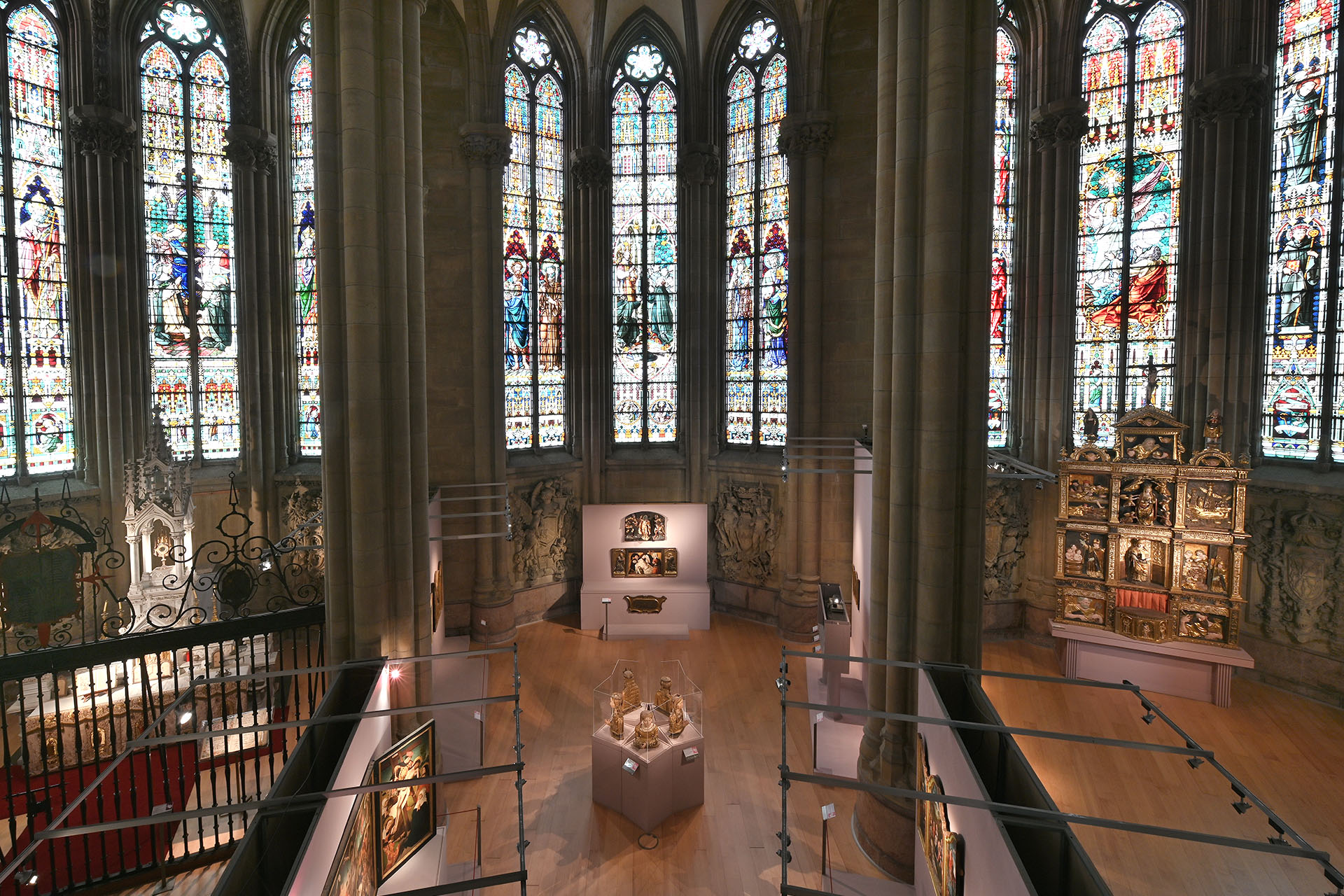
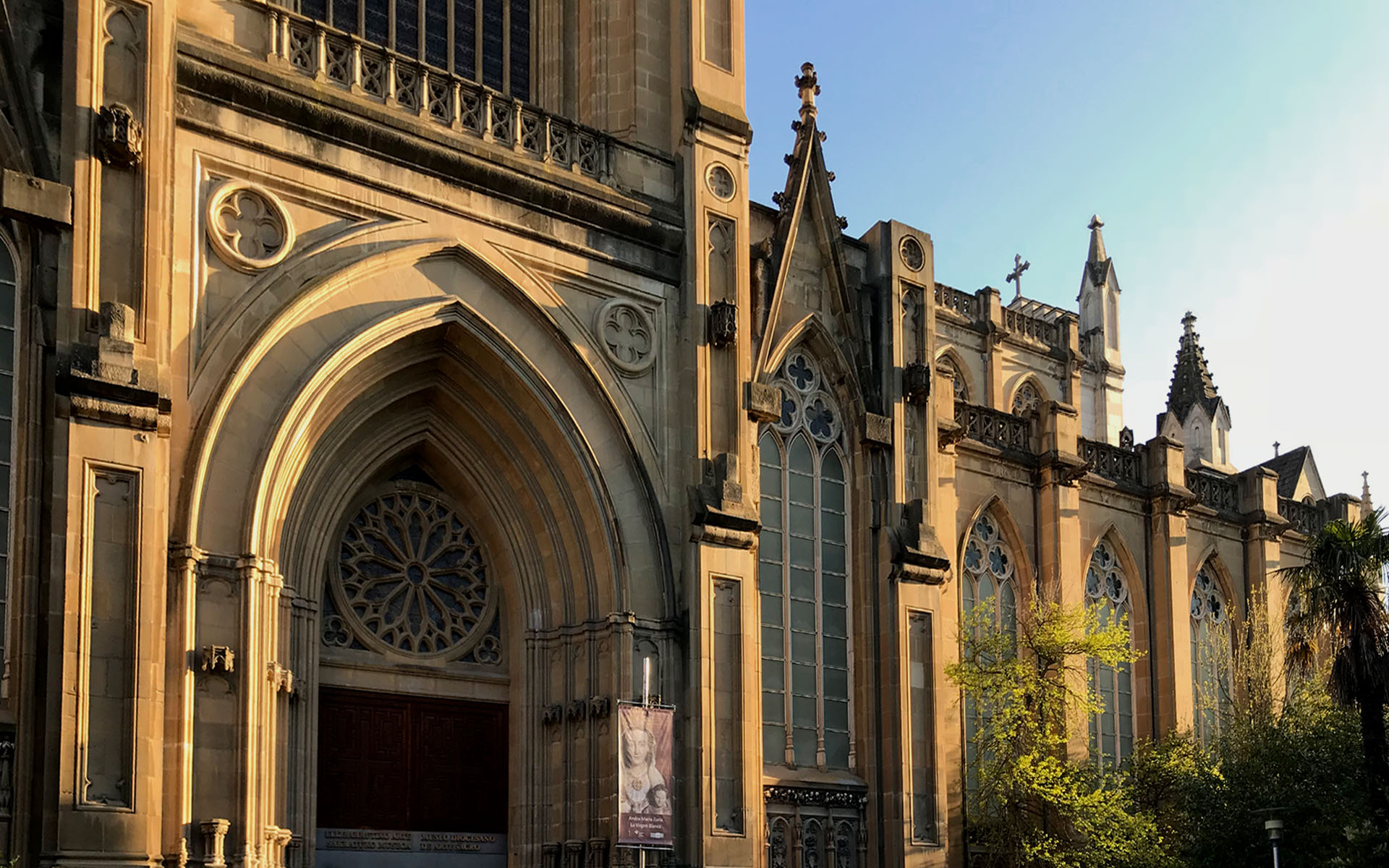
Te damos la bienvenida al Museo Diocesano de Arte Sacro, ubicado en la Catedral de María Inmaculada Madre de la Iglesia, popularmente conocida como Catedral Nueva.
El Museo abrió sus puertas en 1999, ocupando la girola de la catedral. Reúne un importante conjunto de obras de arte con el tema religioso como nexo común. Las piezas proceden fundamentalmente de las colecciones de la Diputación Foral de Álava y la Diócesis de Vitoria, instituciones que promovieron su nacimiento y lo patrocinan.
Alberga obras de grandes artistas como los maestros flamencos, El Greco, José de Ribera o Alonso Cano entre otros. Un museo, en el marco arquitectónico de una catedral del siglo XX, cuyo proyecto y etapas constructivas abarcan de 1907 a 1969.
La historia de su construcción comienza cuando en 1862 Vitoria fue nombrada capital de la Diócesis vasca; la Catedral de Santa María se consideraba pequeña y de difícil acceso y surge la necesidad de construir un nuevo templo. En 1906 se decide convocar un concurso de proyectos y a él se presentan arquitectos de toda España. La propuesta ganadora fue la de Javier Luque y Julián Apraiz, profesionales radicados en la capital alavesa.
La primera fase de las obras discurrió con gran ritmo y rapidez, gracias al esfuerzo de muchos obreros, artesanos y artistas, llegados otras provincias y también del extranjero. La cripta se terminó en 1911 y para 1913 se había levantado el templo hasta una altura de 8 metros. Sin embargo, los problemas de financiación y el cambio en la prelatura de la diócesis, hicieron languidecer la construcción; en 1914 se decide paralizarla.
Las obras estuvieron interrumpidas durante 32 años hasta que en 1946 se decidió su reanudación. El proyecto tuvo que readaptarse a los nuevos tiempos. Se eliminaron muchos elementos arquitectónicos y se emplearon técnicas más económicas como el hormigón armado y la piedra artificial. La decoración escultórica se redujo y bastantes piezas se quedaron sin esculpir. El templo se consagró en 1969 con el nombre de María Inmaculada Madre de la Iglesia.
La catedral, construida en estilo neogótico –considerado el más bello y espiritual–, presenta un interior grandioso y diáfano, con cinco naves, la central de gran altura y amplios ventanales. El exterior es sobrio y no muestra la verticalidad del gótico, ya que las torres y el cimborrio original no se llegaron a construir.
El programa escultórico, aunque se quedó sin terminar, se desarrolla de manera dispersa en capiteles, frisos, claves y gárgolas. Se tratan temas religiosos y profanos; entre los primeros destacan escenas de la Biblia, alegorías de virtudes o vidas de santos. Entre los segundos, animales extraídos de fabulas moralizantes o personajes de la vida cotidiana tratados con carácter satírico.
El conjunto se completa con las vidrieras que tienen un gran protagonismo y fueron realizadas por la reconocida empresa de origen francés Casa Maumejean. Destacan por el realismo de las figuras, el detallismo y los ricos matices de color. Las de la cripta narran escenas bíblicas referidas a la muerte y a la Resurrección. En las naves de la catedral se representan temas de santos con gran devoción en el País Vasco como San Prudencio, San Ignacio de Loyola, figuras de papas como, Pío XII, Juan XXIII o Pablo VI. En la zona del presbiterio hay representaciones de la Asunción de la Virgen, apóstoles o los evangelistas.


El tesoro del Monasterio de Quejana
En este espacio, que denominamos El tesoro de Quejana, encontramos algunas de las piezas más valiosas de la orfebrería gótica en Álava. Están vinculadas a la familia Ayala, una de cuyas ramas, se establece en el siglo XIV en ese valle alavés. Es Fernán Pérez de Ayala, quien en torno a 1332, convierte a Quejana en la sede de su linaje. Además de consolidar su territorio, construye un palacio-fortaleza, y ya al final de su vida, funda junto al palacio, un convento de dominicas; en su capilla mayor, planea ser enterrado junto a su esposa.
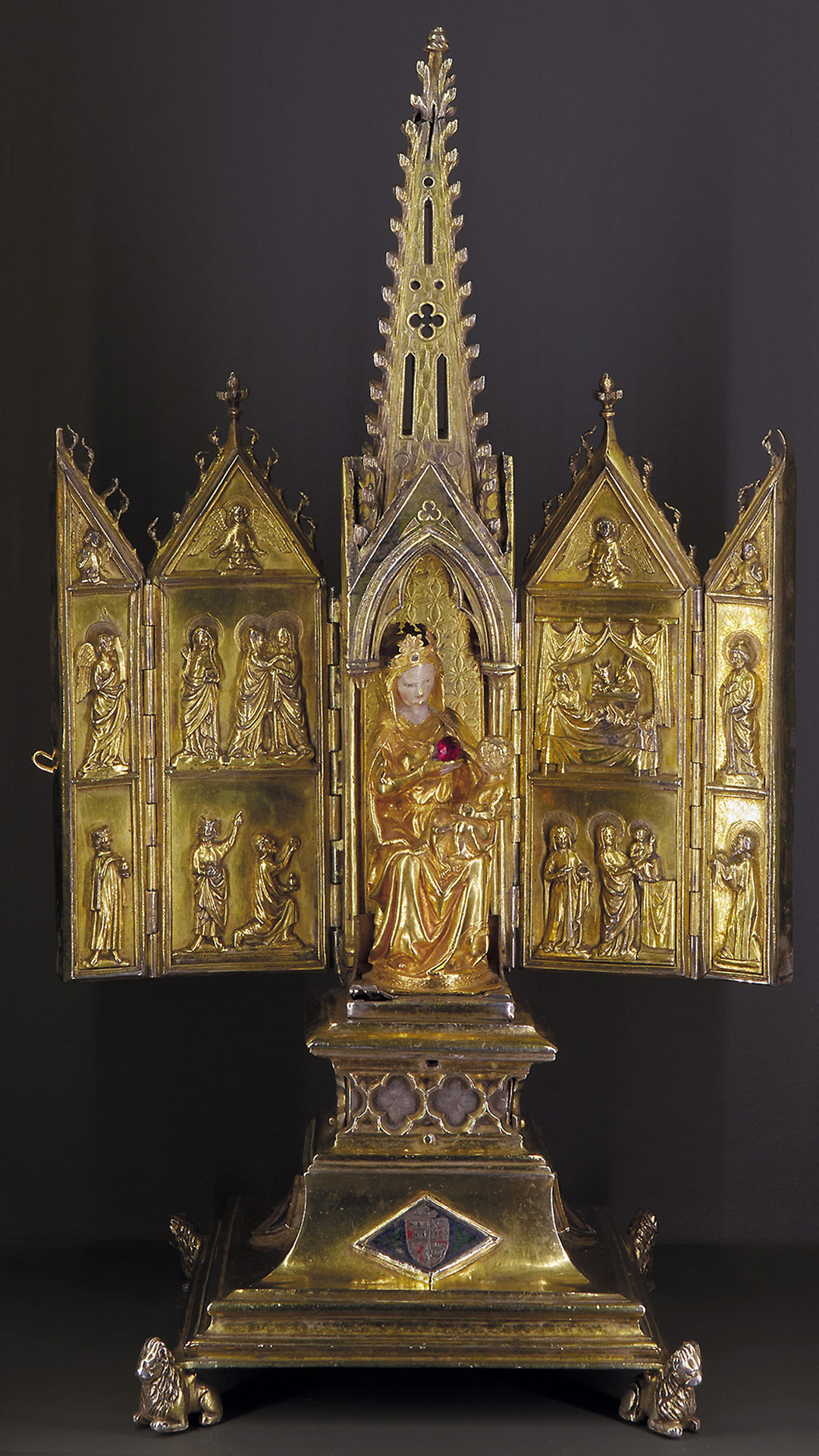
Entre el conjunto de ricos ornamentos religiosos que Fernán cede al convento, destaca la joya familiar más preciada, el relicario de la Virgen del Cabello. Las reliquias habían sido durante toda la Edad Media objeto de veneración. Se adquirían tanto para iglesias como para palacios, ya que tenerlas, otorgaba prestigio a sus propietarios. Para guardarlas, se realizaban verdaderas obras de arte, los relicarios. El de la Virgen del Cabello, una pequeña arquitectura en plata sobredorada, provenía de su madre, quien a su vez la había recibido en herencia de su hermano, el cardenal Pedro Gómez Barroso. Este alto cargo eclesiástico, formó parte de la corte papal de Aviñón, localidad francesa que fue sede pontificia durante gran parte del siglo XIV. En Aviñón, convertida en uno de los centros artísticos más importantes de Europa, encargaría el relicario, ya que lleva la marca de los plateros de esa ciudad en su pie.
En la hornacina central de este retablo en miniatura, se sitúa la estatuilla de la Virgen que sentada, ofrece el pecho al Niño. Sobre su cabeza y protegida por cristal de roca, guarda la reliquia principal, un cabello de la Virgen. En las puertas laterales, se desarrollan escenas de la vida de María. Anunciación y Adoración a la izquierda, y el Nacimiento y Presentación a la derecha. Estas placas móviles, se desplazan hacia arriba, y acogen, colocadas sobre seda y protegidas por cristales, reliquias de distintos santos, cuyos nombres aparecen rotulados en francés.
El relicario ha permanecido en el convento de Quejana durante varios siglos. Solo en celebraciones solemnes, se trasladaba a la torre, edificación que había construido el hijo de Ferrán, el Canciller Pedro López de Ayala como capilla funeraria. En ese espacio, un compendio de todas las artes bajo la advocación de la Virgen del Cabello, el relicario presidía la capilla en el frontal del altar, lo que nos da una idea del papel principal que esta pequeña joya tenía para la familia.
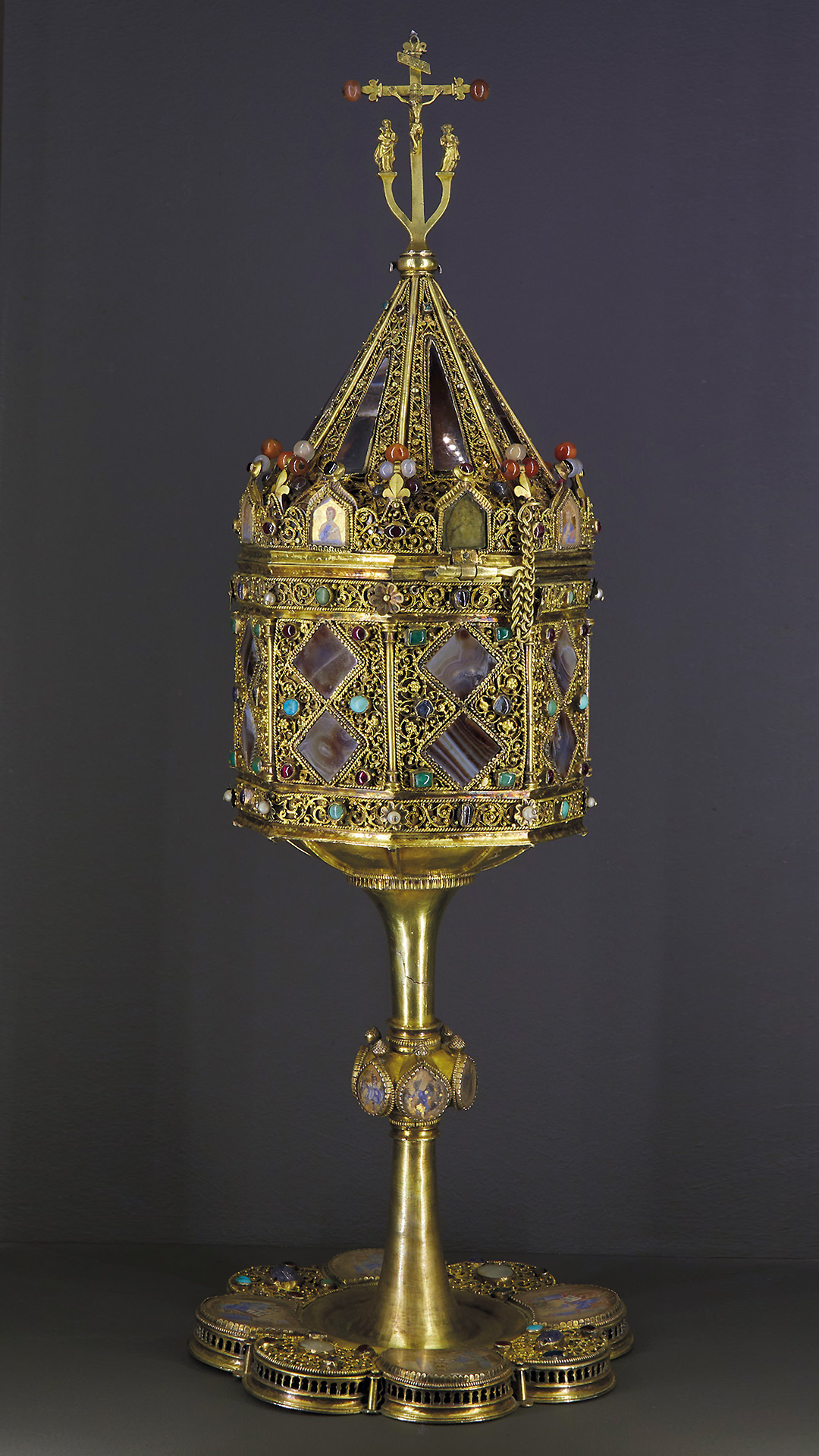
Otra pieza excepcional es este copón, un antiguo relicario, que con el tiempo debió de cambiar de uso. Se cree que llegaría al convento de Quejana en el momento de su fundación, aunque no aparece descrito en los documentos. Por sus características, filigrana, incrustación de perlas y piedras, pinturas, se ha clasificado como una obra de platería veneciana del siglo XIV. Su significación aumenta, al quedar pocos ejemplos conocidos de las obras de estos talleres.
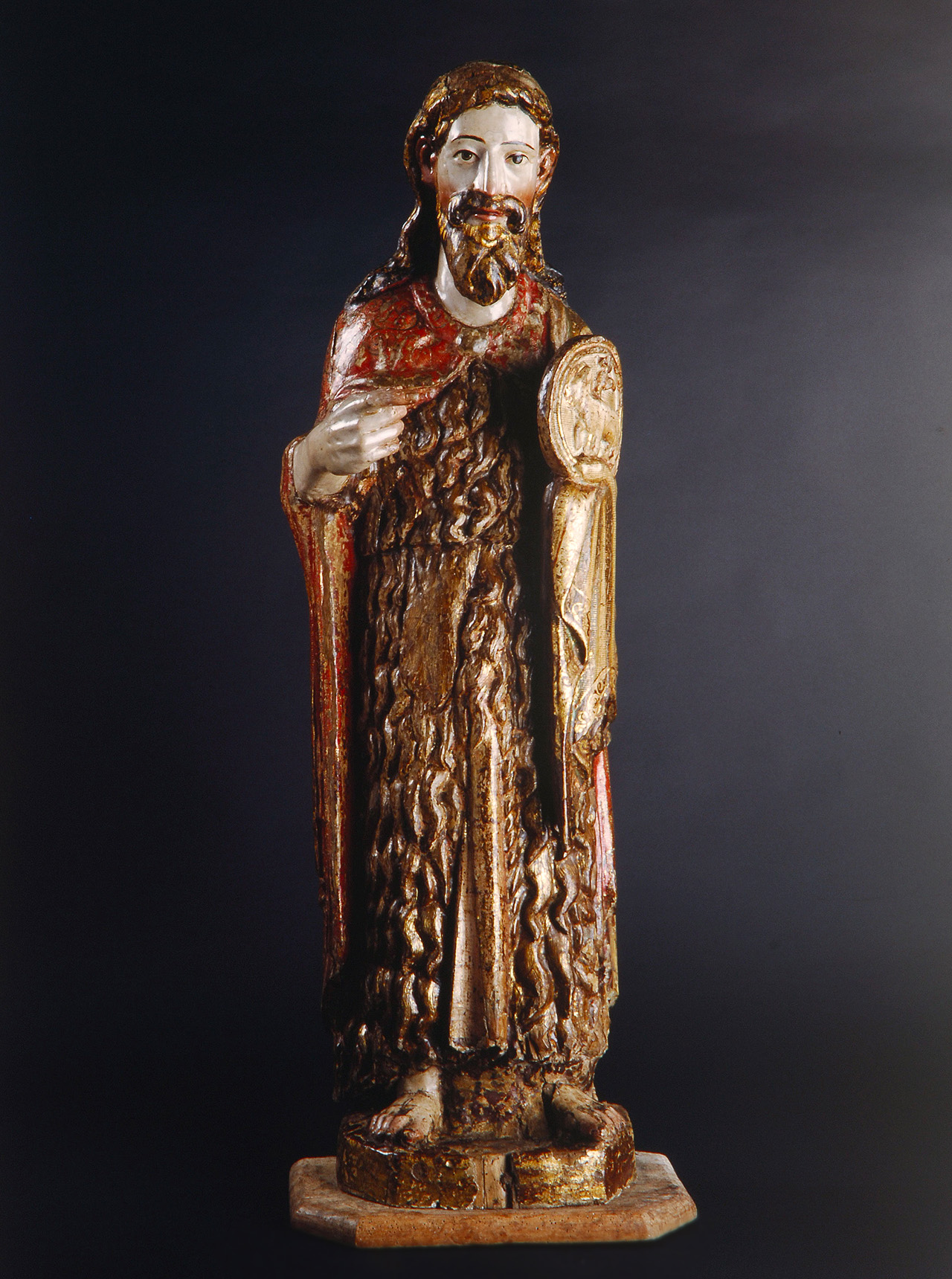
Completan este espacio dos esculturas góticas en madera policromada. El Cristo crucificado responde a características de la zona de Castilla y León. De anatomía naturalista, se le representa ya muerto y sujeto a la cruz con tres clavos. La figura de San Juan Bautista, santo titular del convento de Quejana, parece un buen ejemplo de producción local popular.

Ménsula de Belcebú
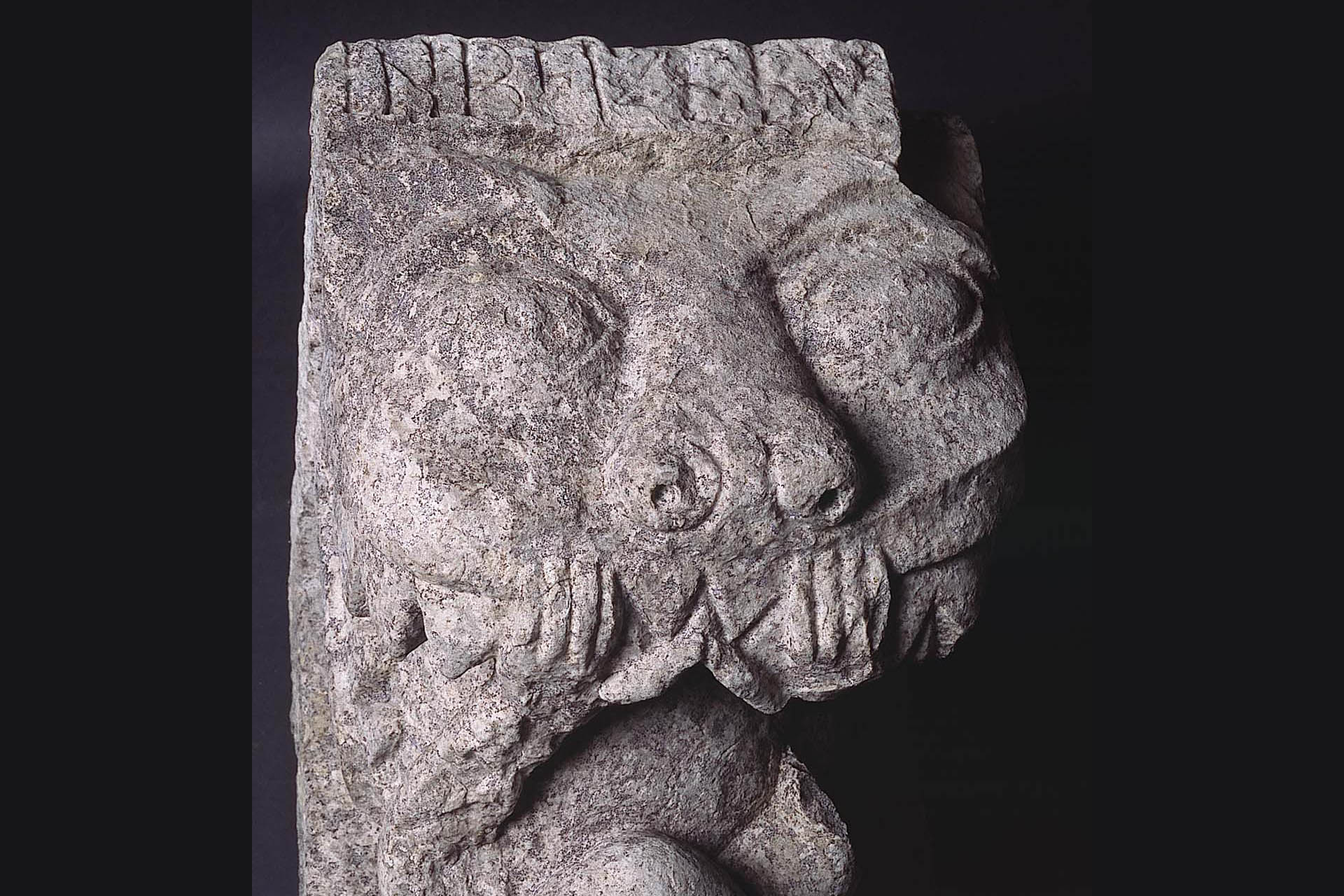
Pieza de piedra tallada que representa una cabeza monstruosa procedente de la parroquia de alavesa de San Miguel de Ilarduia, a donde llegó desde la ermita de Nuestra Señora de Arzanegui.
Desde 1999, se encuentra expuesta en el Museo Diocesano de Arte Sacro de Vitoria-Gasteiz y ha sido solicitada en varias ocasiones para formar parte de distintas exposiciones.
La talla representa a un ser fantástico que está devorando a un humano con sus enormes fauces de afilados dientes. Se aprecia la inscripción de ‘IN BELZEBV’ por lo que la escultura se identifica con Belcebú, príncipe de los demonios. Es una obra datada en el siglo XIII, dentro del románico tardío alavés, y realizada para ser ubicada en el exterior de un templo.
Como era habitual en la estética románica, piezas como ésta formaban parte del discurso que advertía al fiel sobre el castigo de los pecados.
El bloque pétreo, desde el punto de vista funcional, se identifica con una ménsula, elemento arquitectónico sustentante del voladizo de la cubierta del templo. Pero la talla es infernal y presenta unos rasgos y una actitud terrorífica, a pesar de lo grotesco, muy acorde con la intención moralizante de la época donde a toda acción malvada correspondía un castigo terrible, en la misma proporción.


Virgen Blanca, patrona de Vitoria
La Virgen Blanca es la patrona de Vitoria-Gasteiz y a ella están dedicadas sus fiestas mayores. Su imagen ha sido venerada en nuestra ciudad desde hace siglos; su devoción llega, posiblemente, a través del rey Sancho el Sabio de Navarra y su mujer en el siglo XII y se vincula desde sus inicios a la iglesia de San Miguel, una de las más importantes del periodo medieval.
Debió de existir una imagen de la Virgen Blanca más antigua que esta, creada con anterioridad. Más tarde, en el siglo XIV se realiza la talla que contemplamos, aunque desconocemos el lugar exacto para el que estaba destinada. Sí sabemos que tuvo diferentes emplazamientos a lo largo del tiempo; uno de ellos en el muro exterior del ábside de San Miguel, colocada en altura y orientada hacia la plaza del Machete, dominando la entrada a la ciudad por el Portal del Rey. A finales del siglo XVIII, en 1787, se trasladó al machón central, entre los dos arcos que dan acceso al pórtico de la iglesia. Allí, bajo el cobijo de una hornacina, recupera un lugar estratégico acorde a los cambios urbanísticos de Vitoria. Desde esta posición, preside la Plaza de Virgen Blanca, punto neurálgico del centro histórico y desde lo alto del promontorio, vuelve a ejercer un papel protector de la ciudad y sus accesos, de sus habitantes y sus visitantes.
Tras el atentado que sufre la imagen en 1982, con graves daños, se aborda un importante proceso de restauración de la escultura y cuando se vuelve a exhibir, aparece protegida por un cristal. En 2008, la obra se retira definitivamente y en el lugar que ocupaba se coloca una réplica de gran fidelidad y el mismo tamaño que el original, de tal manera que su imagen siga presidiendo la Plaza que lleva su nombre. Tras un nuevo proceso de restauración, la Virgen Blanca se traslada a este museo en 2016. En la decisión priman los motivos de conservación de esta imagen, con un altísimo valor devocional y simbólico en Vitoria.
Es una escultura monumental; sus más de dos metros de altura en piedra caliza tallada y policromada resultan imponentes tanto para los fieles como para los actuales visitantes del museo. La talla parece una figura de mainel, es decir, realizada para decorar la columna o machón que divide en dos el hueco de un pórtico. Las características formales remiten al estilo gótico y la sitúan en el segundo tercio del siglo XIV, aunque con algunos elementos propios del siglo anterior, como la majestuosidad, un tanto rígida de la figura de la Virgen, o la falta de relación entre la madre y el Niño, que se presenta bendiciendo y con la bola del mundo.

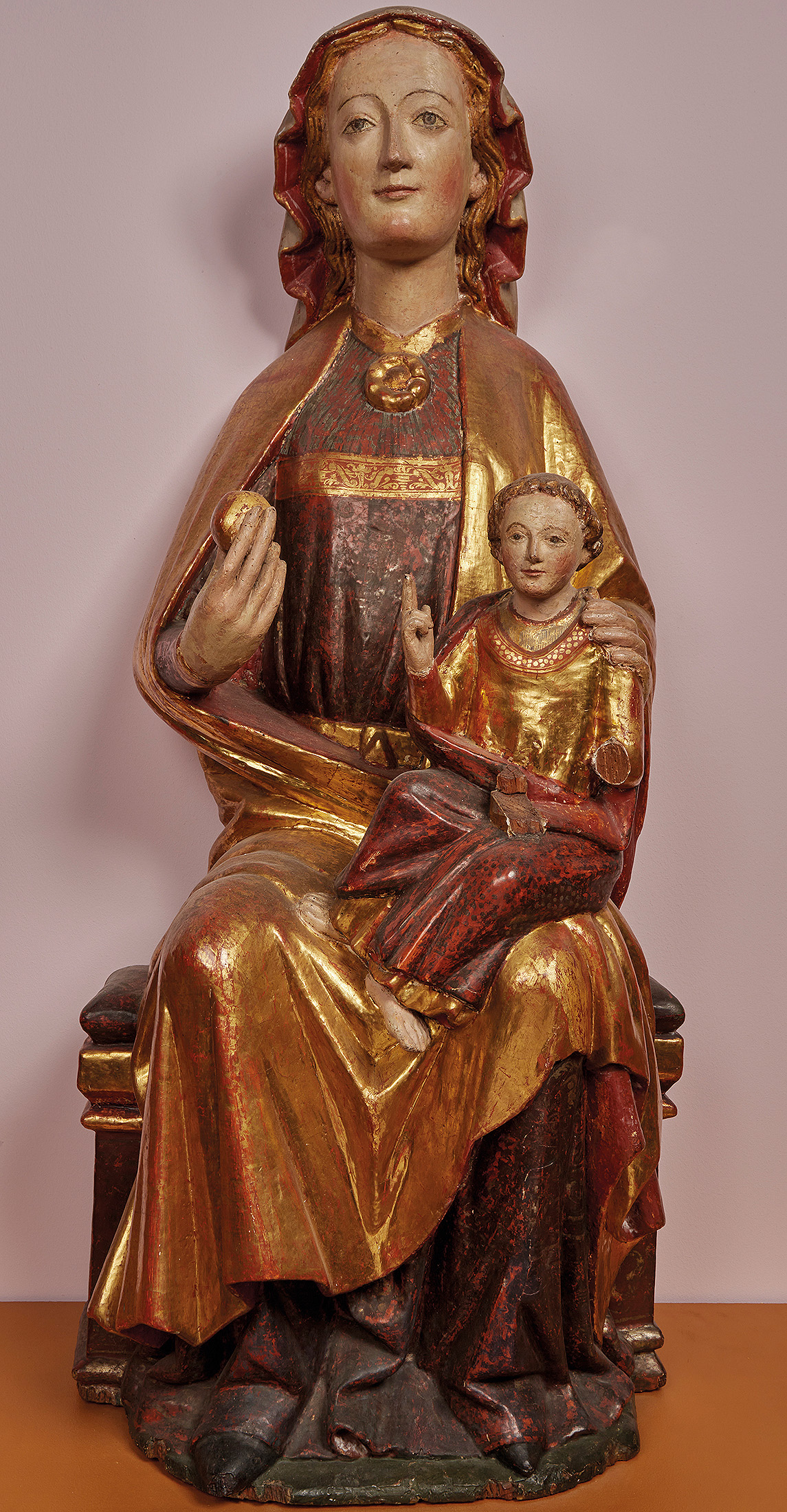
Andra Mari de Ullívarri-Viña
La Virgen con el Niño es uno de los temas más populares y repetidos del arte medieval cristiano. Ésta en concreto, procede de la iglesia del cercano pueblo alavés de Ullíbarri-Viña, pero aquí encontramos también imágenes de otras localidades de la provincia. En el País Vasco, las conocemos con el nombre de «Andra Mari».
Consideradas hoy como obras de arte, fueron en origen imágenes de devoción, con un papel de intermediarias entre los creyentes y la divinidad. Son obras anónimas, elaboradas por maestros artesanos o talleres que en la mayoría de los casos repetían modelos ya existentes. No se trataba nunca de copias exactas, ya que en su realización se introducían rasgos propios de cada mano.
La figura es una talla en madera, habitualmente sobre tronco de roble o nogal, que tras obtener su forma se policromaba para conseguir un aspecto más rico y realista. En este caso, el trabajo de talla se fecha a principios del siglo XIV; la policromía en cambio es posterior, ya que con el paso del tiempo van cambiando los gustos y se imponen nuevas tendencias artísticas. La policromía actual, parece corresponder por su estilo decorativo al siglo XVI.
Se representa a la Virgen sentada sobre una sencilla banqueta con el Niño en su regazo; a esta tipología, que es muy corriente en la época, se le denomina ‘Virgen Trono de Sabiduría’.
Son visibles todas las características típicas del gótico, que deja atrás la rigidez del románico y expresa la cercanía entre la madre y el niño. Este efecto lo consiguen, entre otros, a través del brazo de María, que se posa sobre el hombro del Niño en actitud protectora. Además, Jesús se sienta sobre la pierna izquierda de su madre, abandonando la posición central que ocupaba en épocas anteriores. Los rostros se vuelven más amables y apuntan una leve sonrisa. La Virgen, de rasgos finos y dulces, viste una túnica sujeta con un cinto, un florón colgado al cuello y en su cabeza, un tocado que cubre su largo cabello ondulado.
La simbología está muy presente en todo el arte medieval. En su mano derecha, María sostiene una manzana, para mostrarla como una Nueva Eva, que redime al mundo del pecado original a través de su hijo. El Niño, hace el gesto de bendecir con su mano derecha y con la izquierda, hoy perdida, probablemente sujetaría el libro de los Evangelios.
Esta pieza destaca por la calidad de su talla y es una de las más bellas versiones de esta tipología.


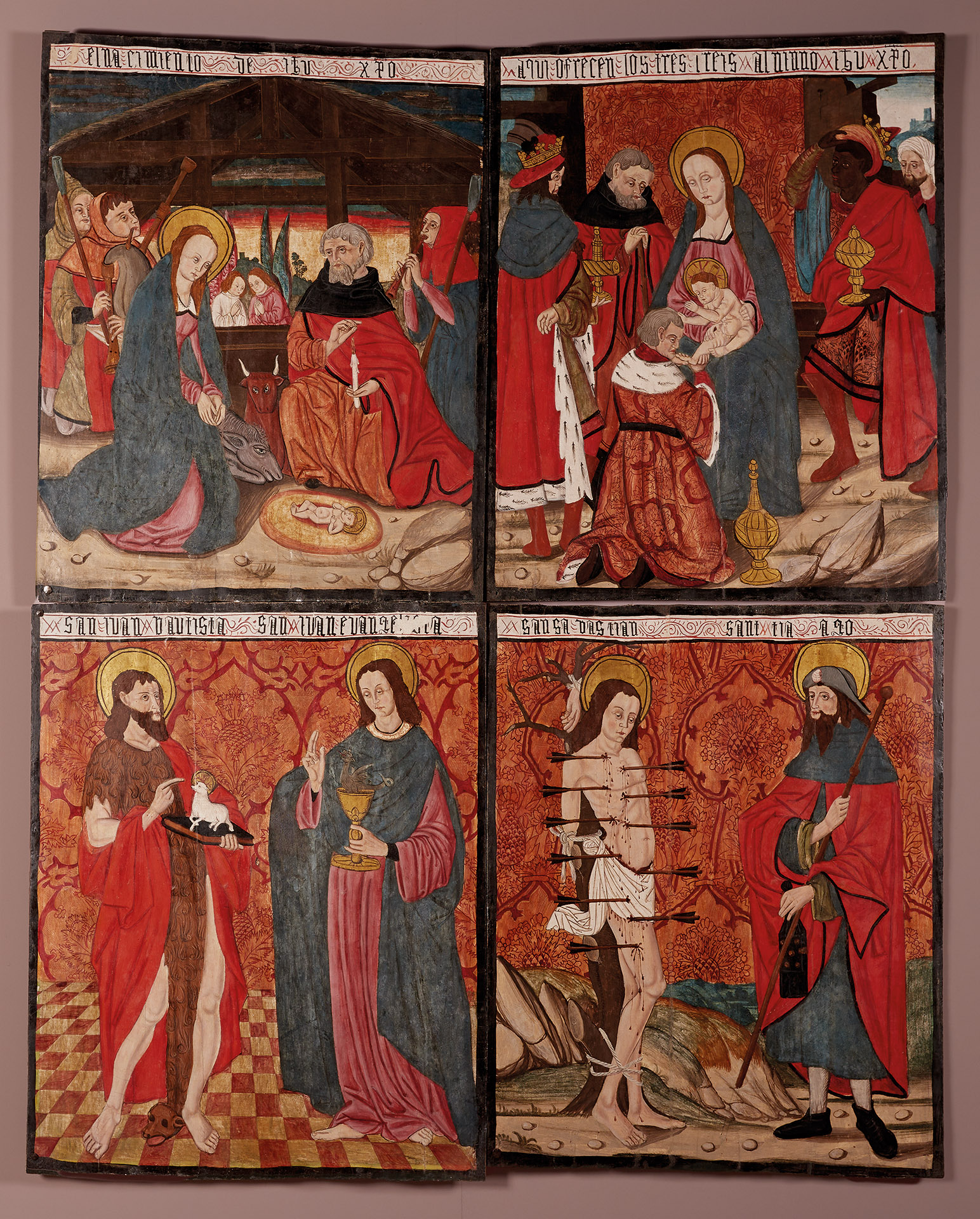
Retablo de la Parroquia de San Andrés (Tortura, Álava)
Estas siete tablas, forman parte de un retablo pictórico dedicado al ciclo de la Natividad. Proceden de la iglesia románica de la pequeña localidad de Tortura, en el municipio alavés de Kuartango. La iglesia, dedicada a San Andrés, disponía de una única nave y el retablo se situaba en el frontal del ábside. En origen se componía de ocho tablas pero una de ellas se encuentra en paradero desconocido.
Por sus características estas pinturas se inscriben en el gótico tardío, lo que permite fecharlas entre finales del siglo XV y principios del XVI. El retablo de Tortura destacaba por sus grandes dimensiones y su verticalidad, que intentaba cubrir buena parte del muro de la capilla mayor donde se instalaba. El resto de la pared, hacia arriba, se completaba con una pintura mural -cuyas huellas todavía son visibles- y que simulaba un retablo escultórico, coronado por un calvario.
Las tablas se organizan en dos alturas. En el piso superior las que representan escenas de la vida de la Virgen: La Anunciación del ángel a María, La Visitación, El Nacimiento de Jesús y La Adoración de los Reyes. En el inferior están dispuestos distintos santos en parejas y con los atributos que los distinguen. De izquierda a derecha vemos a San Pedro con la llave y a San Andrés con la cruz, símbolo de su martirio. En la siguiente, San Juan Bautista viste con la piel de camello, tal y como dice el Evangelio y sobre su libro descansa la figura del pequeño cordero blanco, símbolo del sacrificio pascual y San Juan Evangelista con la copa de la que sale una serpiente, en alusión a la copa envenenada que bebió después de bendecirla y que no le causó ningún mal. En la última, San Sebastián, atado de pies y manos al árbol y atravesado por las flechas y Santiago, ataviado como peregrino, con la venera o concha y el cayado o bastón.
Las figuras son de canon esbelto, tienen un dibujo de línea sencillo y los volúmenes apenas están modelados, como es corriente en la pintura gótica. Los colores son planos, los dominantes son el rojo bermellón y el azul ultramar. Están pintadas al temple, técnica pictórica que se usaba desde la antigüedad y se mantuvo en práctica hasta inicios del siglo XVI, siendo sustituida entonces por el óleo.


Conjunto funerario de los Martínez de Salvatierra
Nos encontramos ante un conjunto de arte funerario procedente de la capilla de los Reyes de la iglesia de San Pedro de Vitoria-Gasteiz.
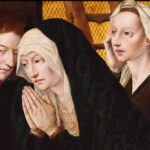
En el centro de la composición, una tabla de estilo flamenco con el tema del Descendimiento. Es una copia de una obra perdida del maestro de la Escuela de Gante Hugo van der Goes, del siglo XV. Presenta un formato apaisado, lo que ayuda a la distribución de los personajes situados alrededor de la Cruz, que ocupa el centro. En primer plano, el cuerpo inerte de Cristo, cubierto con un sudario, y junto a él, José de Arimatea, vestido completamente de negro. A sus pies, Nicodemo, con barba y vestido rojo. La escena se completa con la figura de María con las manos en posición de oración, San Juan y, tras ellos, María Magdalena con una mano en la mejilla y el pelo cubierto por un tocado. El fondo es liso dorado con una retícula de líneas verticales, que hace destacar más a las figuras.
Los personajes están muy próximos entre sí, algo muy habitual en la pintura flamenca del momento, y muestran expresión de devoción y emoción contenida en sus rostros.
La pintura fue traída de Flandes por el escribano real y alcalde de Vitoria don Diego Martínez de Salvatierra y su esposa, doña Antonia Martínez de Adurza. En un principio se destinó al ámbito doméstico, pero luego fue reutilizada y se le dio un nuevo sentido al integrarse como pieza fundamental del conjunto funerario.
A la obra se le añaden dos relieves laterales con las imágenes de los donantes, realizadas por el taller de Juan de Ayala, un importante maestro renacentista local. Se les representa de perfil, en posición de oración, con el rosario entre sus manos y vestidos con la indumentaria burguesa de la época. A sus pies, una cartela en la que aparecen las empresas acometidas por estos donantes, su nombre, la ciudad y el año en que fue colocada en la iglesia de San Pedro, 1567.
El conjunto funerario se remata con un relieve en madera de estilo renacentista alusivo a la Resurrección de Cristo, tema especialmente significativo en una capilla funeraria. Cristo está de pie, con una pierna adelantada como si estuviera caminando y bendiciendo con la mano derecha. Está cubierto por una capa roja ondulante, que da movimiento a la escena, y flanqueado por dos soldados vestidos con armadura y yelmo, en tonos dorados y negros. Su expresión es de asombro y de un cierto temor al haber sido testigos del suceso.
Este conjunto es un buen ejemplo del arte en la transición del Gótico al Renacimiento. Una tabla de estilo flamenco, obra importada, acompañada por una serie de relieves de estilo renacentista realizados por uno de los más importantes talleres de escultura de Álava en ese momento, el de Juan de Ayala.
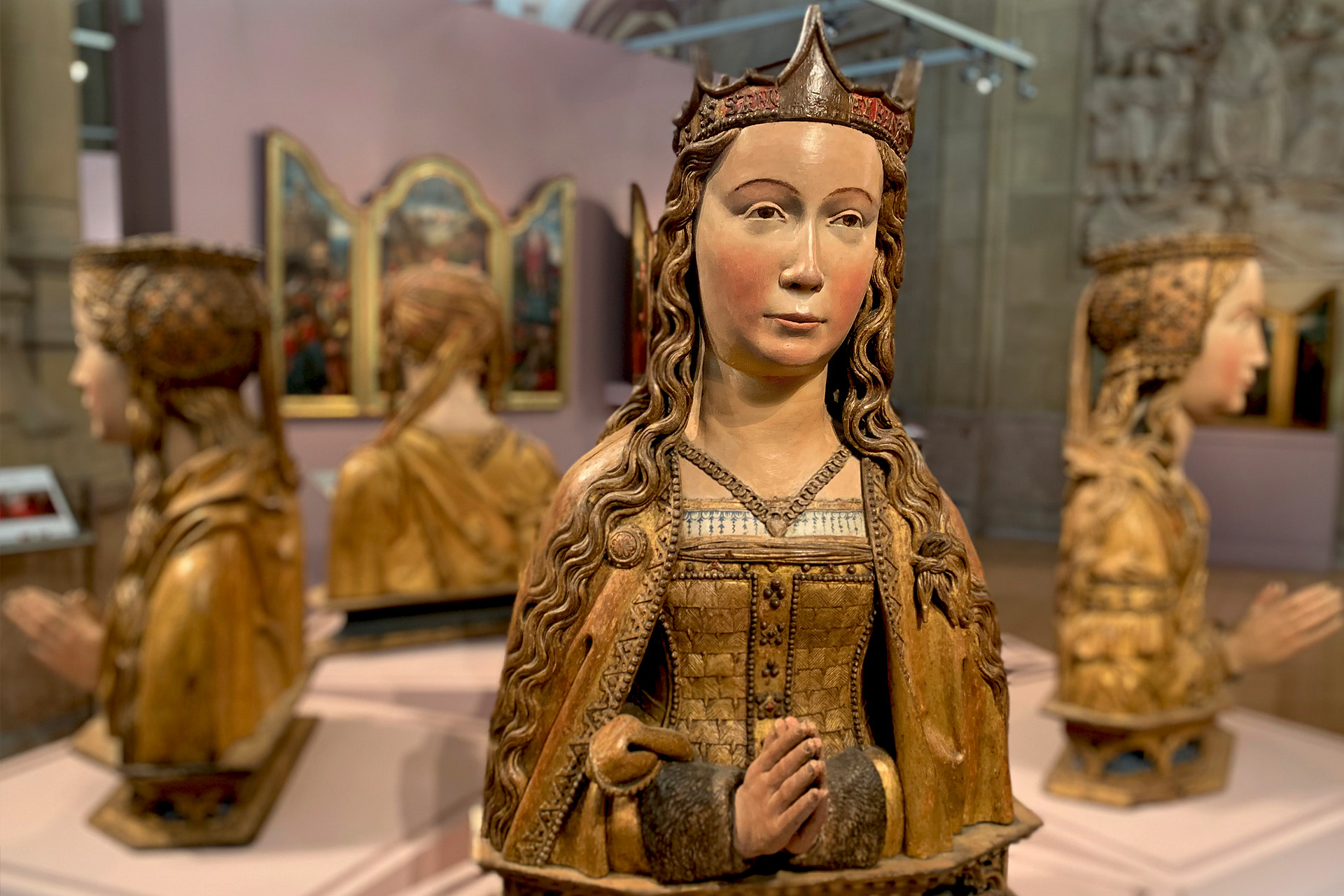

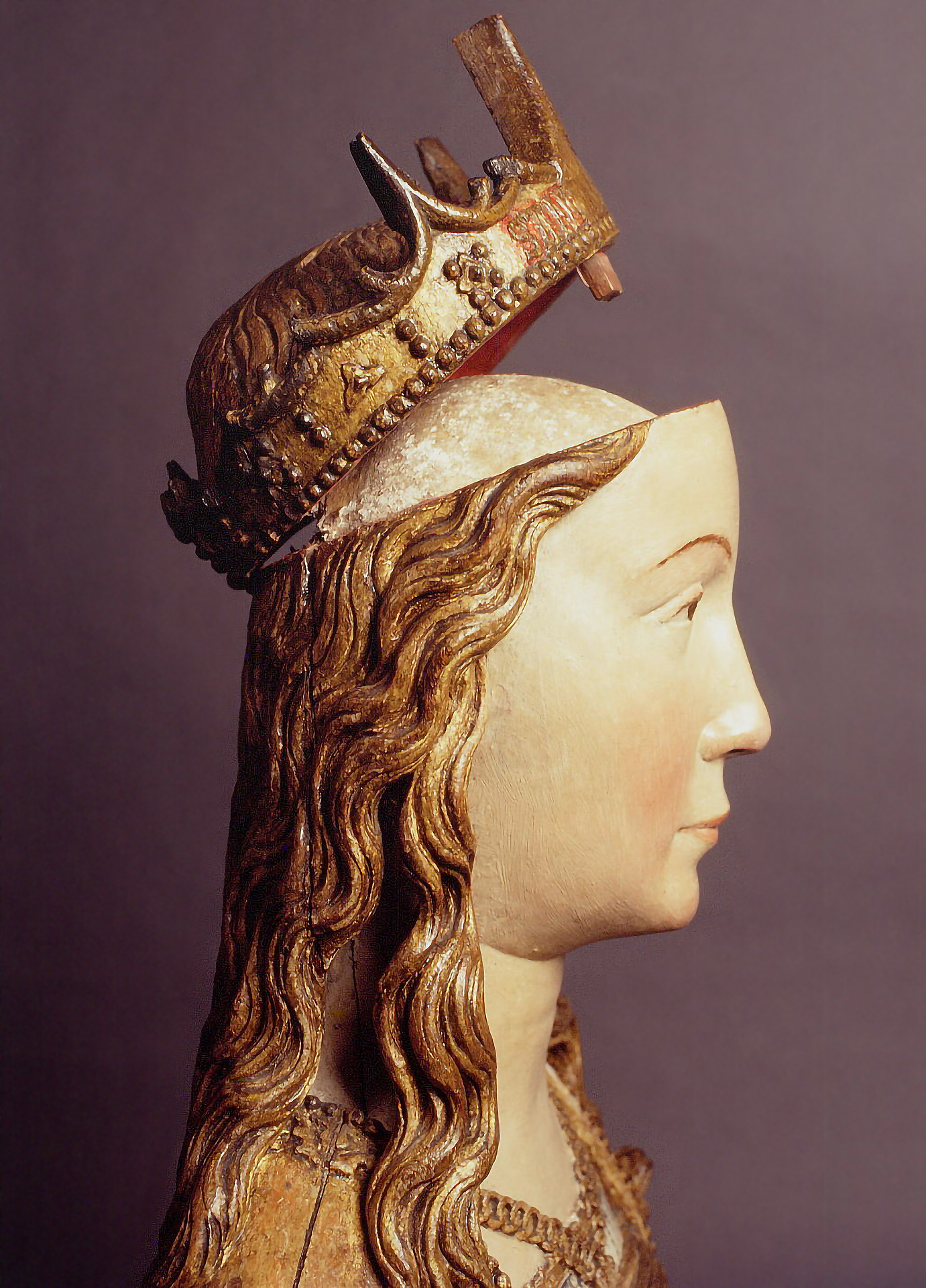


Conjunto de bustos relicarios
Este conjunto de cinco bustos relicarios proceden de la capilla de las Once Mil Vírgenes o de la Milagrosa en la iglesia de San Vicente de Vitoria-Gasteiz. La capilla fue fundada por Ortuño Ibáñez de Aguirre y su esposa María de Esquível como lugar de enterramiento. Ortuño fue secretario del emperador Carlos V y pertenecía a una familia de mercaderes de Vitoria con intereses en los Países Bajos. La llegada de estas piezas a nuestra ciudad es incierta; pudieron ser adquiridas directamente por el matrimonio, o bien ser un regalo del propio emperador. En este momento histórico, mediado el siglo XVI, la posesión de importantes reliquias dotaba a sus poseedores de gran prestigio.
Son figuras de madera dorada y policromada, de tamaño un poco inferior al natural, cuya función de relicarios viene dada por unas tapas en la parte superior del cráneo de las imágenes. Están formadas por varias piezas de roble perfectamente ensambladas. Representan a las vírgenes mártires que acompañaron a Santa Úrsula en su peregrinación a Roma y fueron martirizadas en Colonia (Alemania), conocidas según la leyenda medieval como las Once Mil Vírgenes.
Las santas presentan una actitud orante, rostro de ojos rasgados y labios carnosos y se fechan hacia 1520. Están ataviadas a la moda cortesana flamenca, los tocados y peinados son todos diferentes y de complicada elaboración. Las trenzas y las ondulaciones del cabello están minuciosamente trabajadas, así como las joyas que adornan sus vestidos.
La policromía es muy cuidada e imprime una gran sensación de realidad. Combinan perfectamente el dorado de los vestidos y de los cabellos, las carnaciones de rostros y manos, o las lacas rojas de algunos detalles.
La autoría se atribuye al taller de la familia Borman, afincada en Bruselas, uno de los más destacados de su tiempo. Trabajaron durante cuatro generaciones para la iglesia y la nobleza europea y para la realeza europea, como en el caso de Carlos V y su corte. Las piezas están relacionadas con una veintena de bustos relicarios repartidos actualmente entre iglesias y museos de Europa y América, aunque el conjunto de Vitoria es el más completo.


Juan de Anchieta y el retablo inacabado de San Miguel
El escultor guipuzcoano Juan de Anchieta es, quizá, el mejor exponente del Renacimiento en el País Vasco y Navarra y posiblemente en el resto de España en el último tercio del siglo XVI. Muy influenciado por la figura de Miguel Ángel, su obra destaca por la monumentalidad, el dominio de la anatomía, el desnudo, la proporción y la fina ejecución técnica.
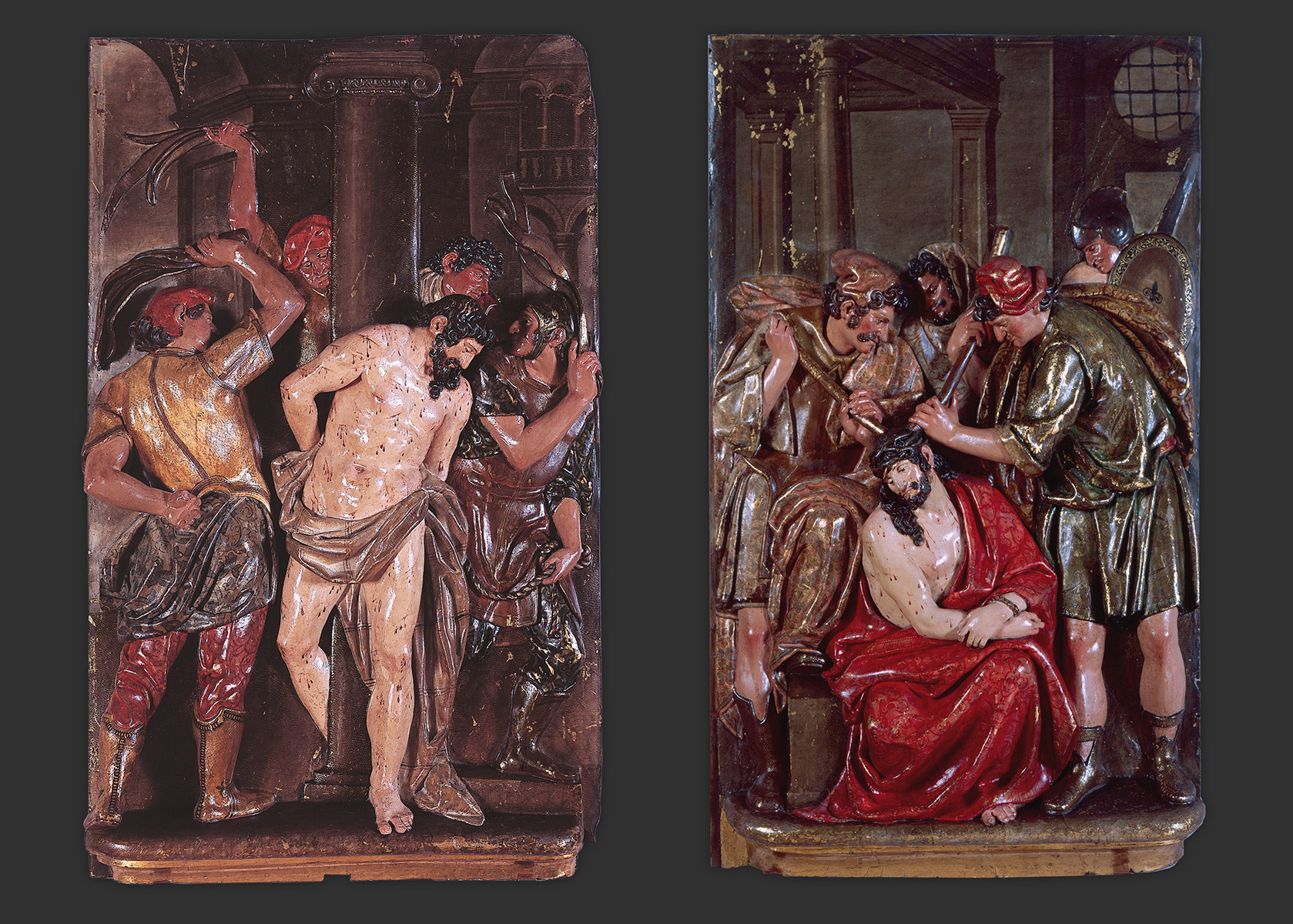
Un buen ejemplo de su arte es este conjunto de piezas que, en origen, estaban destinadas al retablo de la iglesia de San Miguel en Vitoria-Gasteiz. Pertenecen a un retablo inacabado contratado en 1578 por el mencionado Anchieta junto al escultor alavés Lope de Larrea, autor, entre otros, del retablo mayor de Santa María de Agurain (Álava). La obra del retablo no se pudo concluir por motivos económicos (ya que se derrumbó la torre de la iglesia y hubo que afrontar ese gasto inesperado). Años más tarde, en 1624, la parroquia decidió contratar un nuevo retablo con Gregorio Fernández, uno de los mejores escultores barrocos, y que es el que se puede contemplar en la actualidad.
El trabajo de investigación del Museo ha permitido la instalación de este retablo simulado y situar cada imagen en el lugar en el que estaba destinada.
San Miguel, titular de la parroquia, es la imagen principal y ocupa un lugar importante, en el remate de la construcción. Se le representa como un hombre joven, bello, con esbeltas proporciones, elegante movimiento y actitud victoriosa, ya que pisa al demonio, que está bajo sus pies.
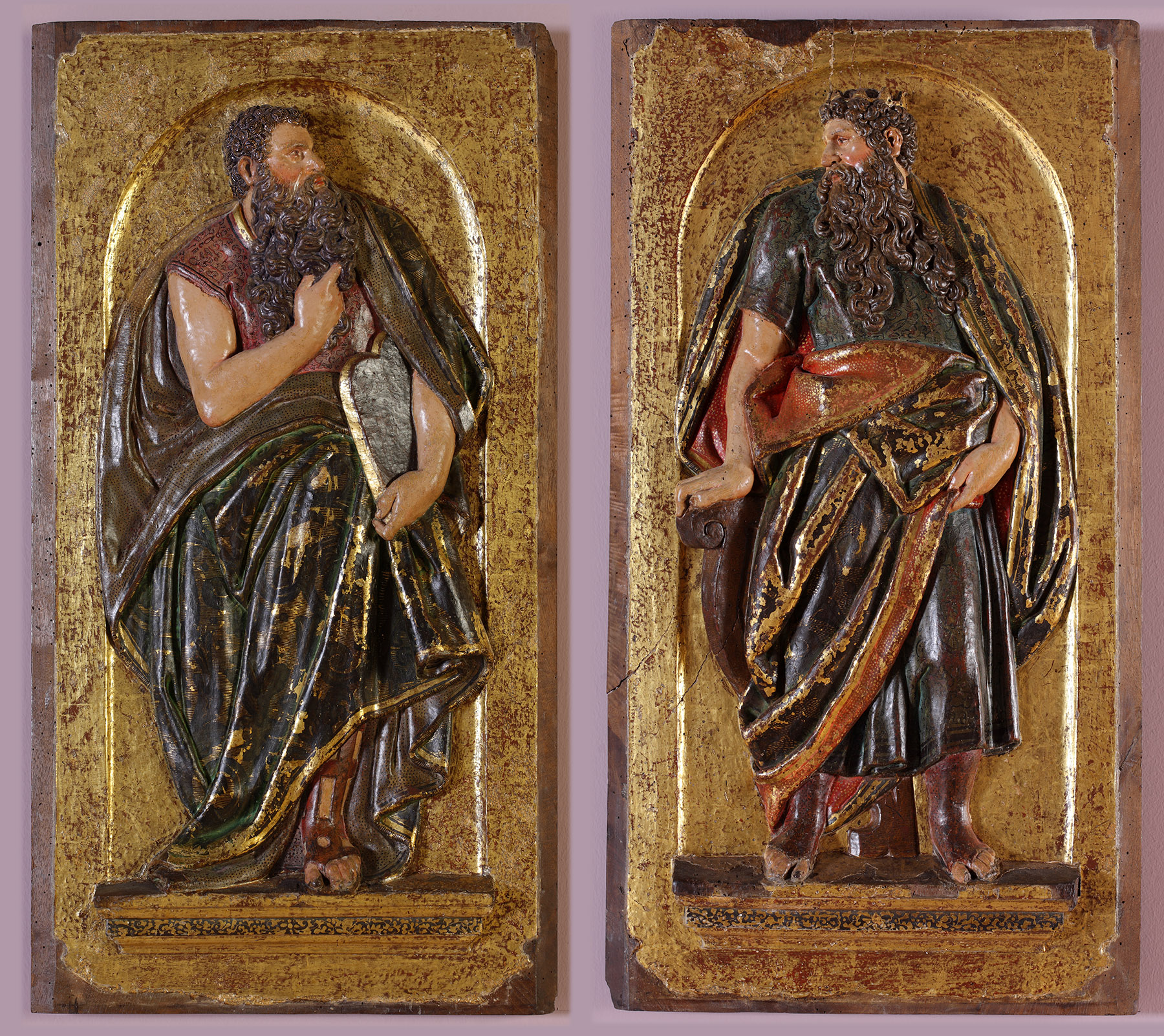
En el banco del retablo, la zona inferior más cercana a los feligreses, se han colocado los relieves que representan la Pasión de Cristo: la Flagelación y la Coronación de espinas. En la Flagelación destaca el cuerpo de Cristo, casi desnudo, y en primer plano, con una anatomía potente, con la musculatura muy marcada. En el segundo, Jesús, doliente, se cubre con un amplio manto mientras recibe el castigo de los verdugos. El escultor se muestra como un maestro en la composición, creando un interesante juego de volúmenes que dan profundidad a las escenas. Los dos pequeños relieves representan a personajes del Antiguo Testamento, en este caso a los profetas que anuncian al Mesías. Moisés porta las tablas de la Ley y el rey David se presenta con corona y con una gran lira entre sus brazos. Estas dos piezas están en el banco, junto a los relieves de mayor tamaño.
Estas son las obras que se atribuyen a Juan de Anchieta. La figura restante, San Pablo, es más tosca de ejecución que las anteriores y se puede atribuir al taller de Esteban de Velasco, uno de los más importantes de escultura de Vitoria entre los siglos XVI y XVII. Es una figura monumental y musculosa que destaca por la expresión concentrada del rostro.


Tres obras de José de Ribera. Cristo Crucificado, San Pedro y San Pablo
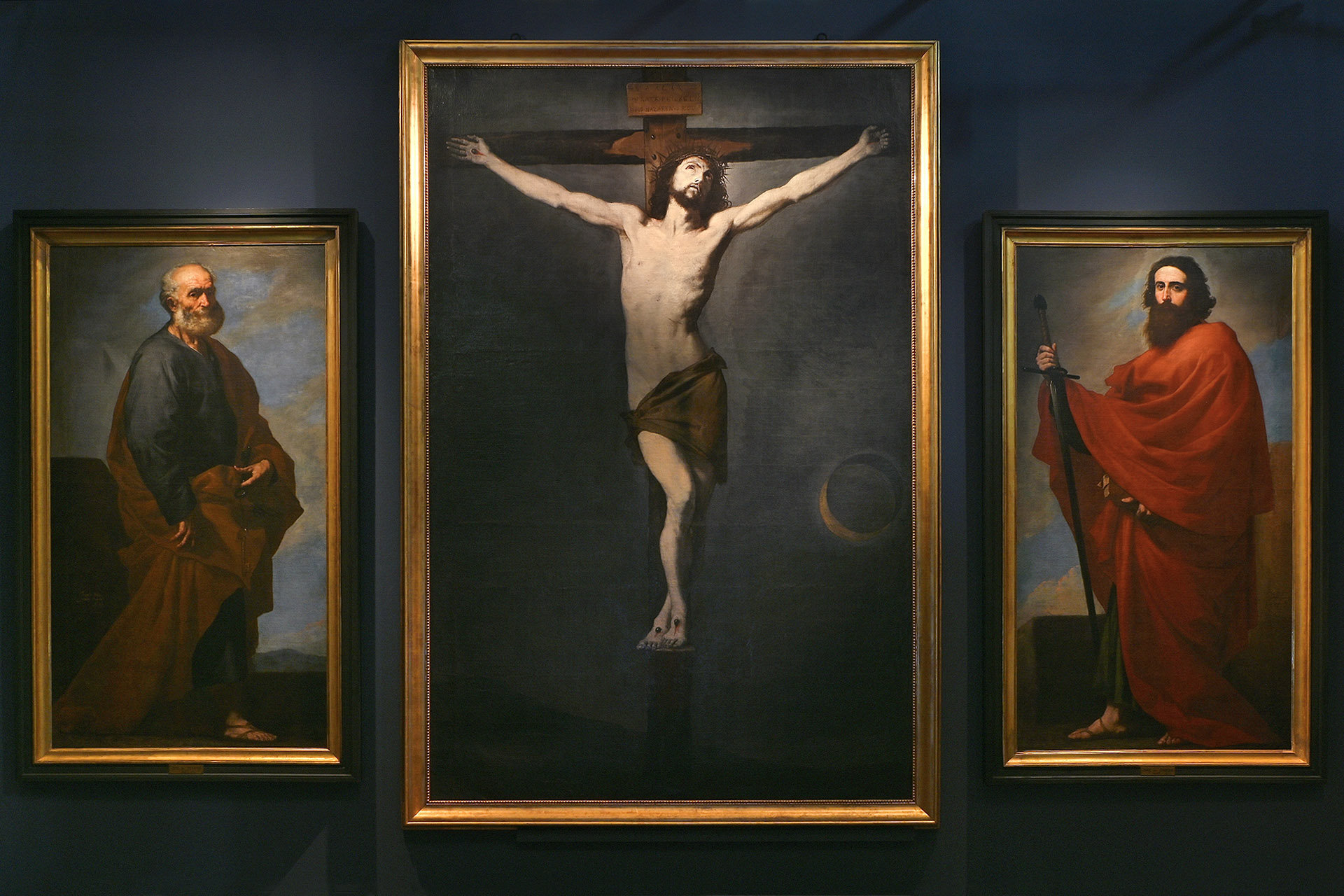
Hace ya mucho tiempo que ilustres viajeros que pasaban por Vitoria recogían con admiración en sus escritos y guías de viaje, la sorpresa de encontrarse con estas pinturas. Imponentes por su tamaño y calidad artística, estaban firmadas además por uno de los más importantes pintores del barroco, José de Ribera.
Ribera, había nacido en 1591 en la localidad valenciana de Xàtiva. Todavía joven, se traslada a Italia; primero a Roma y más adelante a Nápoles, donde se establece de forma permanente. Entonces, Nápoles formaba parte de la corona española. Mantenía una corte –que debió de ser espléndida–, con sus funcionarios, su boato y su ceremonial. Los virreyes, representantes del monarca, actuaban muchas veces como mecenas y eran los mejores clientes de los artistas. En el siglo XVII, durante la vida del pintor, el flujo de obras de arte desde Nápoles hacia la península fue muy importante; por un lado, adquisiciones y obsequios para la Corona, por otro, las obras que virreyes, nobles y altos dignatarios adquirían para sus palacios o para sus capillas privadas en conventos o iglesias de sus localidades natales en España. En su taller napolitano, José de Ribera trabajó para todos.
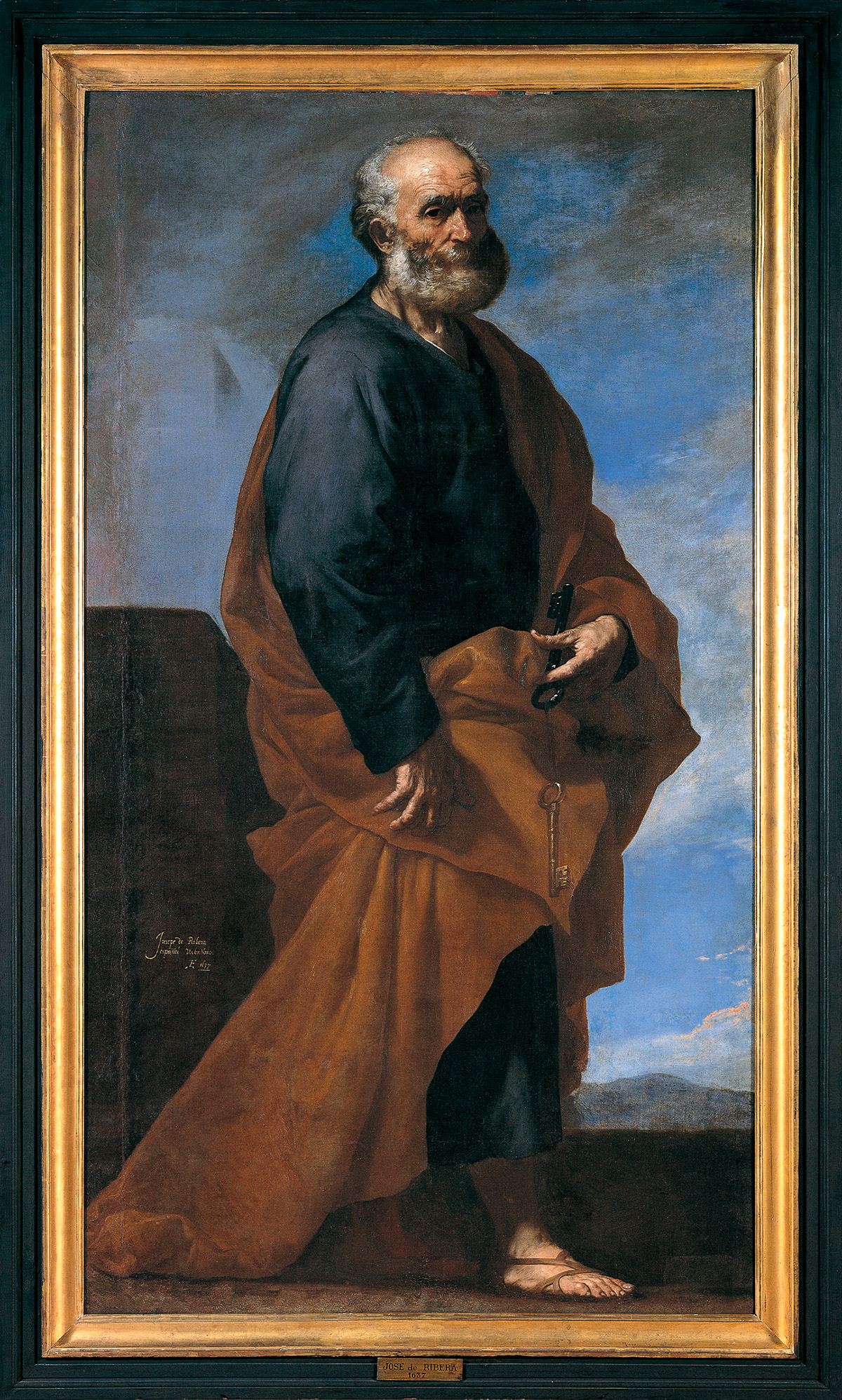
Un buen ejemplo de la categoría de sus encargos lo tenemos en estas tres obras. El hecho de ser figuras representadas de cuerpo entero y a tamaño natural, nos indican la importancia de sus destinatarios. En el centro, la atención recae sobre la figura de Cristo en la cruz. Majestuoso en su anatomía, Ribera opta por un realismo idealizado en su cuerpo. El dramatismo se incrementa por la soledad de su silueta, iluminada frente a un paisaje desierto y oscuro; esta oscuridad queda explicada por el eclipse de sol representado a la derecha de la escena. A los lados del Cristo, las figuras de San Pedro y San Pablo van acompañadas de sus atributos clásicos, las llaves y la espada. La magnitud de las figuras se ve engrandecida en comparación con el paisaje, muy bajo. La riqueza de las tonalidades de vestidos y capas, los volúmenes de los tejidos y sus plegados, acompañan los rostros realistas de los apóstoles.
Cronológicamente las tres son obras realizadas en la madurez artística del pintor y corresponden a la última etapa de su trayectoria. Los apóstoles, fechados en 1637, pertenecieron al Conde de Monterrey, que fue virrey de Nápoles. El Cristo Crucificado, lo pintó seis años más tarde, pero se desconoce quien fue su primer propietario.
Su llegada a nuestra provincia sería posterior, pero dentro del mismo siglo XVII. Se debe a Don Pedro de Oreitia y Vergara, un ilustre vitoriano que ocupó altos cargos en la corte de los Austrias. A su muerte, en 1694, poseía un importante patrimonio con una numerosa colección artística. En su testamento lega los apóstoles y el Cristo de Ribera, al Convento de Santo Domingo de nuestra ciudad. En concreto dispone que se coloquen a modo de retablo en la capilla donde sería también enterrado.
Allí permanecieron hasta el siglo XIX. Entonces, afectados por el proceso de desamortización de los bienes eclesiásticos, conocida como Desamortización de Mendizábal, los tres Riberas pasaron a ser propiedad de la Diputación Foral de Álava. Esta institución continúa teniendo su titularidad, pero están depositados en este museo desde su apertura en 1999.


Inmaculada Concepción de Alonso Cano
Este magnífico lienzo procede de la parroquia de Nuestra Señora de la Asunción de Berantevilla, a la que fue posiblemente donado por el franciscano D. Pedro de Urbina y Montoya. Nacido en este pueblo alavés, llegó a detentar importantes cargos eclesiásticos, como virrey y capitán general de Valencia y arzobispo de Sevilla. En la actualidad ocupa un lugar destacado en la colección barroca del Museo Diocesano de Arte Sacro de Vitoria-Gasteiz, mientras que en la parroquia de Berantevilla se puede ver una copia de este cuadro.
La defensa del dogma de la Inmaculada Concepción de María por los franciscanos fue muy importante en el siglo XVII, momento en que se fija la iconografía de la misma, a pesar de que el dogma no se aprueba hasta 1854. Esta devoción es fundamental en el arte sacro alavés, de ahí la cantidad de representaciones con las que cuenta el museo y las distintas parroquias de la Diócesis de Vitoria.
Francisco Pacheco establece en su tratado ‘El arte de la pintura’ que el color de la túnica de la Virgen debiera de ser blanco, sin embargo, existen representaciones entre los grandes artistas sevillanos de la época (Zurbarán, Velázquez…) con la túnica de color rojo y el manto azul. Este es el caso del polifacético artista granadino Alonso Cano quien realiza esta obra con un sentido muy clasicista dada su simetría y claridad. La pintura está protagonizada por la imagen de la Inmaculada Concepción, una mujer joven de formas romboidales y movimiento en ‘contrapposto’ (la cabeza gira hacia el lado izquierdo, mientras que el cuerpo y sus manos juntas a la altura del pecho, giran hacia la derecha del espectador). El vuelo del manto y la mirada hacia el espectador, nos indican que está descendiendo de los cielos rodeada de cabezas de angelitos alados en la parte superior y de dos ángeles de cuerpo entero que portan lirios y azucenas, respectivamente, a ambos lados de la imagen mariana en la parte inferior del lienzo.
Además de estos símbolos florales de pureza y resurrección, la imagen mariana se apoya en una media luna con cabezas de ángeles en sus pies. Si añadimos la aureola radiante en la cabeza, donde se distinguen algunas estrellas, nos encontramos con una iconografía de la Purísima básica pero claramente tomada de las fuentes tradicionales: los libros bíblicos del ‘Cantar de los Cantares’ y del ‘Apocalipsis’ de San Juan.
La perfección de la composición, de los colores y de las figuras, en perfecta sintonía y unidad, hacen que esta obra sea considerada la más bella Inmaculada pintada por Alonso Cano, constituyendo una de las joyas artísticas de nuestro museo.

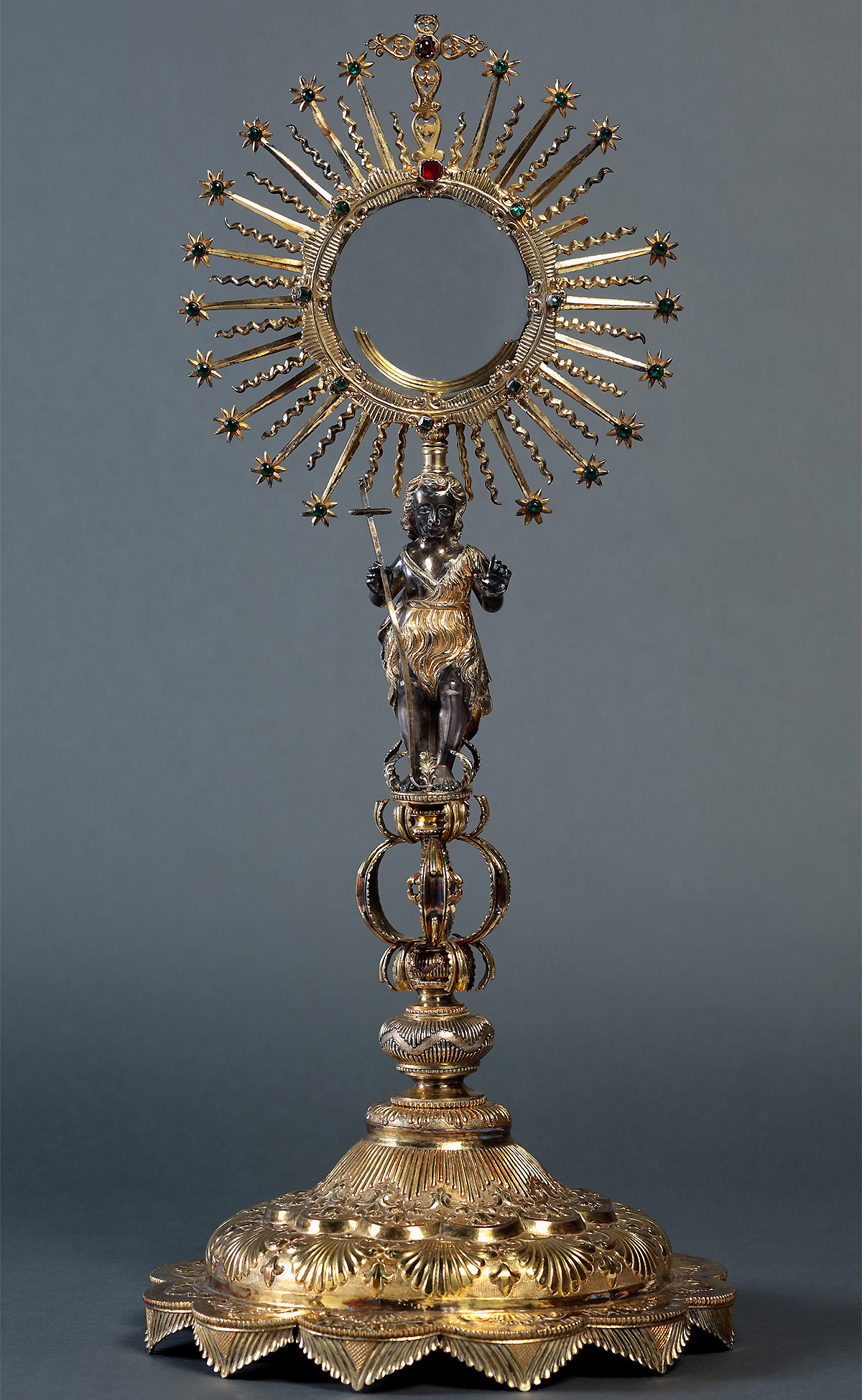
Custodia de Manzanos
La custodia es una pieza litúrgica que se utiliza para exponer la Eucaristía y llevarla en procesión el día del Corpus Christi. Se empezaron a realizar a mediados del siglo XIII, en 1264, cuando el papa Urbano IV instituyó la festividad del Corpus y tuvieron un momento de gran esplendor en los siglos XVI y XVII con el auge de la Contrarreforma, la respuesta de la Iglesia Católica a la Reforma protestante. Tras el Concilio de Trento, las custodias se diversificaron en gran variedad de estilos y formatos. Así, es posible encontrar custodias monumentales y fijas como la realizada por Juan de Arfe a finales del siglo XVI para la catedral de Sevilla o de modalidad portátil, que suelen estar ricamente decoradas como en este caso.
Nos encontramos ante una custodia de origen mejicano, ya que proviene del taller de Oaxaca, un potente centro platero entre los siglos XVI y XVIII. La podemos incluir dentro de las llamadas de tipo sol, porque el viril –la pieza donde se coloca la sagrada forma– está rodeada de rayos serpenteantes y haces con estrellas que recuerdan el brillo y la luz del sol para simbolizar la idea de Cristo como “sol de justicia” y “luz verdadera”.
La custodia es de plata, algunas zonas están sobredoradas y presenta piedras de colores incrustadas. Su pie está decorado con relieves de flores y palmetas –algo muy característico de los talleres mejicanos– y en el astil o fuste presenta la figura de San Juan Bautista Niño o San Juanito. Está vestido con su característica piel de camello y porta una cruz larga en su mano derecha; en este caso, rompiendo su iconografía tradicional, no lleva el Cordero en la izquierda. Estas custodias con astil de figura son muy frecuentes en el Barroco hispanoamericano, especialmente de la zona mejicana.
Se trata de una pieza singular ya que el orfebre juega con el cromatismo del metal, con las zonas lisas y ornamentadas en resalte.
Esta pieza, junto con un cáliz, fue donado a la parroquia de San Juan Bautista de Manzanos (Álava) por Juan Miguel de Viana, natural de dicha localidad, en 1768. No sabemos la profesión o actividad del donante pero era muy habitual que comerciantes o personas vinculadas a la administración, la política o la Iglesia, que habían vivido en América enviaran obras de arte a sus localidades de origen y de esta modo enriquecer el patrimonio de estas parroquias.